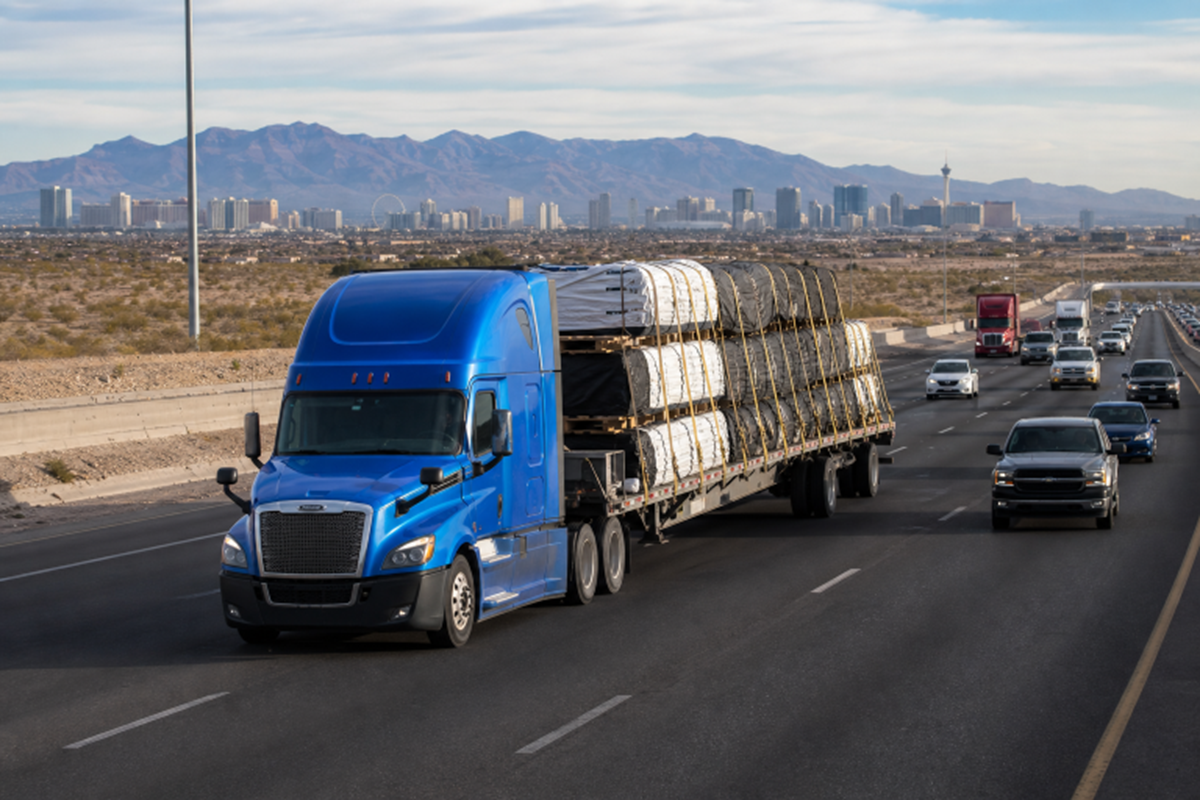
Commercial trucks move enormous amounts of freight every day, but a load that is too heavy, poorly distributed, or insufficiently secured can turn an ordinary trip into a serious roadway hazard. When a crash involves shifting freight, a rollover, spilled cargo, or an overloaded trailer, injured people may need help determining what happened. A Las Vegas semi-truck accident lawyer can review the records and parties involved in a collision, but protecting safety and evidence should come first.
Overloaded and unbalanced cargo can affect steering, braking, tire performance, stopping distance, and a truck’s ability to remain stable in a turn. These problems are not limited to flatbeds or open trailers. Freight inside an enclosed trailer can shift suddenly, changing the truck’s center of gravity and making it difficult for the driver to maintain control.
Why Improperly Loaded Cargo Is Dangerous
A truck is designed to carry weight within specified limits and in a balanced position. When too much weight is loaded onto the vehicle, critical components such as brakes, tires, suspension systems, and axles may be subjected to greater stress. An overloaded vehicle may require more stopping distance, especially downhill or on wet pavement.
Balance matters as much as total weight. Heavy freight concentrated on one side, loaded too high, or placed too far toward the front or rear, can change how a tractor-trailer handles. A sudden lane change, sharp curve, or emergency braking event may cause the trailer to sway, jackknife, or roll over. Loose cargo can also break through trailer doors, fall onto the road, or strike nearby vehicles.
Common Loading Problems
Not every collision involving a truck is caused by cargo, but investigators may look closely at loading practices when the crash involves instability, loss of control, or debris. Common concerns include:
- Exceeding a truck’s gross vehicle or axle weight limits.
- Placing too much weight on one side of a trailer.
- Loading freight too high raises the center of gravity.
- Failing to use appropriate chains, straps, blocks, braces, or tie-downs.
- Using damaged, weak, or improperly rated securement equipment.
- Failing to inspect the cargo after loading or during a trip.
- Allowing palletized freight, machinery, pipes, coils, or other items to shift in transit.
- Ignoring special handling requirements for unusually heavy or irregular cargo.
See also: Debugging Live Cricket Betting Pages Before the Next Over
Cargo Safety Rules and Responsibilities
Federal requirements generally apply to many commercial vehicles operating in interstate commerce, and state rules may impose additional duties. The rules are intended to prevent freight from shifting or falling while a commercial vehicle is traveling on public roads. They address matters such as load restraint, tie-down working limits, blocking and bracing, and certain commodity-specific securement methods.
Compliance is not simply a paperwork issue. A carrier may need to ensure that the truck is suitable for the load, the equipment is in working order, and the driver has performed the required inspections. Drivers also have a duty to use reasonable care on the road. If a driver notices cargo movement, damaged restraints, or an unsafe load condition, continuing to drive can create a substantial risk.
Who May Be Legally Responsible?
A cargo-related truck crash may involve more than one responsible party. Liability depends on the evidence, contracts, applicable laws, and the specific actions or omissions that led to the collision. Possible parties may include:
- The truck driver, if the driver ignored warning signs, skipped inspections, drove too fast for the load, or operated carelessly.
- The motor carrier, if it failed to maintain equipment, train drivers, enforce safety procedures, or supervise loading practices.
- The shipper or freight broker, if it provided inaccurate weight information or played a role in arranging an unsafe shipment.
- The loading company or warehouse may be held liable if workers place freight improperly or fail to secure it correctly.
- An equipment manufacturer or maintenance provider, if a defective strap, chain, trailer component, tire, or braking system contributed to the event.
Multiple parties can dispute responsibility after a crash. That is one reason a prompt investigation is important, particularly when a company controls the truck, trailer, loading records, and electronic data.
Evidence That May Explain the Crash
Evidence in a commercial trucking case can disappear quickly. Useful materials may include photographs of the cargo, vehicle damage, tire marks, debris, trailer doors, tie-downs, scales, and roadway conditions. Witness names, dashcam video, nearby surveillance footage, and a written timeline can also preserve details that are easy to forget.
Records may reveal whether the load was weighed, who loaded it, when inspections occurred, and whether the driver reported a cargo issue. Investigators may seek bills of lading, weight tickets, loading diagrams, dispatch messages, electronic logging data, maintenance records, inspection reports, and onboard camera footage. Detailed scene and vehicle information used in crash investigations can help establish how a collision unfolded.
What To Do After a Cargo-Related Truck Crash
- Move to a safer location if you can do so without creating additional danger.
- Call 911 and request medical assistance when anyone may be injured.
- Do not approach spilled, leaking, unstable, or hazardous cargo.
- Follow directions from police, firefighters, emergency dispatchers, and other responders.
- Take photographs only when it is safe, including the truck, trailer, visible cargo, road conditions, and vehicle damage.
- Exchange basic information and avoid arguments or guesses about fault.
- Seek medical evaluation, even if symptoms seem minor at first.
Headaches, dizziness, stiffness, back pain, numbness, and concentration problems may develop hours or days after a collision. Keep records of medical visits, prescriptions, symptoms, time missed from work, and crash-related expenses. Following a recommended treatment plan can support both physical recovery and accurate documentation.
Potential Losses After a Collision
A serious truck crash can create financial and personal losses well beyond vehicle repairs. Depending on the facts, an injured person may face emergency treatment, hospital bills, rehabilitation, medication costs, lost income, reduced earning capacity, transportation expenses, household assistance needs, pain, and emotional distress. Available recovery varies based on state law, insurance coverage, the severity of injuries, and the evidence of fault.
Mistakes To Avoid
- Deleting photos, videos, texts, or location data connected to the crash.
- Repairing, selling, or disposing of a damaged vehicle before it is documented.
- Posting opinions, photos, or details about the collision on social media.
- Guessing about speed, distance, cargo weight, or who caused the crash.
- Ignoring new or worsening physical symptoms.
- Accepting a quick insurance settlement before the full impact of injuries is known.
- Waiting too long to learn about applicable legal deadlines.
Frequently Asked Questions
Can cargo shift inside an enclosed trailer?
Yes. Even when freight cannot be seen from outside the trailer, it can move during braking, turns, or sudden maneuvers. That shift can affect handling and may contribute to a rollover or loss-of-control crash.
Does an overweight truck automatically establish liability?
Not automatically. An overweight condition may be important evidence, but liability depends on whether the excess weight or related conduct contributed to the crash and injuries.
Should crash records be kept after an insurance claim begins?
Yes. Keep all records until the matter is fully resolved, including medical documents, insurance communications, photographs, repair estimates, receipts, and witness information.
Final Takeaway
Overloaded and unbalanced cargo can make a commercial truck harder to control and can expose drivers, carriers, loaders, and other businesses to legal scrutiny after a crash. Prioritize safety, obtain medical care, preserve evidence, and avoid rushed statements or decisions while the cause of the collision is being evaluated.